





- 首页
- >
- 正文
History made! Sun Yingsha Wins 3rd WC

The women’s singles final of the 2026 ITTF World Cup in Macao once again featured the world’s top two players, Sun Yingsha and Wang Manyu. This time, Sun secured a 4–1 victory, winning the World Cup women’s singles title for the third straight year and making history in the event.
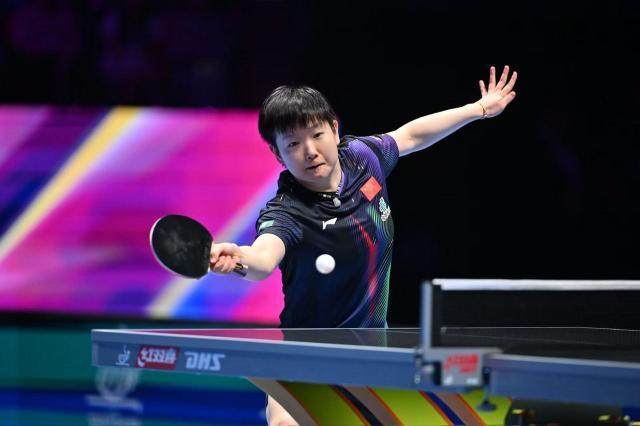
At this year’s Macao World Cup, not only the Chinese men’s team but also the women’s team faced significant challenges. All six Chinese players advanced from the group stage to the knockout rounds, but youngster Qin Yuxuan lost to Germany’s Winter, while Kuai Man was defeated by Sun Yingsha. Still, four Chinese players reached the quarterfinals.
In the quarterfinals, all four Chinese mainstays encountered varying degrees of difficulty. Wang Yidi and Chen Xingtong both suffered heavy defeats to Winter and Shin Yubin, respectively. Sun Yingsha edged past Hana Goda in a grueling seven-game match by just two points, while Wang Manyu also needed great physical and mental effort to overcome chopper Hashimoto Honoka in six games.
In the semifinals, facing first-time World Cup semifinalists Winter and Shin Yubin, Sun Yingsha and Wang Manyu left no room for surprises. Both won their matches earlier today to set up an all-Chinese final, marking the seventh consecutive edition in which China has swept the women’s singles gold and silver medals.
Tonight’s showdown between Sun Yingsha and Wang Manyu represented the highest level of women’s table tennis. The two had already met twice this year—in the Asian Cup final and the Singapore Smash final—with Sun emerging victorious on both occasions. In the 2024 World Cup final, Sun had staged a comeback from 0–2 down to claim her first title. This time, a win would make her the first player in history to achieve three consecutive World Cup titles, while a victory for Wang would have given her a maiden crown.
In the first game, both players attacked aggressively and were evenly matched in forehand rallies, but Sun showed greater variation at key points to win 11–9. She maintained her dominance in the second game, taking it 11–8. In the third, Wang increased the spin and even held game points, but Sun remained decisive to win 13–11 and take a commanding 3–0 lead. Wang fought back in the fourth, gaining the upper hand in backhand exchanges to win 11–8. In the fifth, Sun focused more on shot quality and transitions, sealing the match 11–7 to claim her third consecutive World Cup women’s singles title and make history.
热门评论
全部评论
相关阅读
权威源自专业
“巨头鲸+”是巨头鲸传媒集团旗下《巨头鲸周报》及诸多体育类杂志的唯一新媒体平台。 平台汇集权威的一手体育资讯以及国内外顶尖资深体育媒体人的深度观点, 是一款移动互联网时代体育垂直领域的精品阅读应用。